When comparing air-to-air plate heat exchangers, thermal conductivity is frequently used as a measure of performance.
Aluminium has a thermal conductivity of approximately 200 W/m·K, while conventional PVC has a conductivity of around 0.16 W/m·K.
At face value, this suggests an overwhelming advantage for aluminium.
However, there is an important distinction between the thermal conductivity of a material and the thermal performance of a complete heat exchanger.
An efficient heat exchanger is not simply one that conducts heat effectively through its plates. It must also transfer that heat efficiently between the plate surfaces and the two airstreams.
For indoor swimming pool ventilation, where high humidity, aggressive atmospheric conditions and continuous operation must all be considered, this distinction is particularly relevant.
To understand the performance of an air-to-air plate heat exchanger, we first need to examine how heat is transferred.
The process involves three stages:
Each stage introduces resistance to heat transfer.
The relationship can be expressed as:
1/U = 1/h₁ + t/k + 1/h₂
Where:
This simplified equation reveals something important.
Although aluminium has a significantly higher thermal conductivity than a conventional polymer, the resistance associated with conduction through a thin plate can be relatively small compared with the resistance associated with transferring heat between the air and the plate surfaces.
Consider a theoretical example using an aluminium plate 0.15 mm thick and a PVC plate 0.25 mm thick.
The calculated conductive thermal resistances are approximately:
These figures demonstrate that, although the materials differ considerably in conductivity, the actual conductive resistance through either thin plate can be small compared with typical air-side convective resistances.
The comparison does not prove that both heat exchangers will achieve identical thermal performance. It does, however, demonstrate why material conductivity alone is an insufficient basis for determining the efficiency of the complete assembly.
The limiting factor can be how effectively heat reaches and leaves the plate, rather than how quickly it travels through the plate itself.
When air travels across a heat exchanger surface, a boundary layer develops immediately adjacent to the plate.
Within this region, airflow velocity decreases towards the stationary surface, while temperature gradients develop between the air and the plate.
This creates resistance to convective heat transfer.
Consequently, the way air moves through the exchanger has a significant influence on its overall performance.
Plate geometry, channel spacing, local air velocity, surface area and flow distribution all contribute to the resulting heat transfer coefficients.
A highly conductive plate cannot eliminate the resistance created by the air flowing across its surfaces.
This is why plate design deserves just as much engineering consideration as material selection.
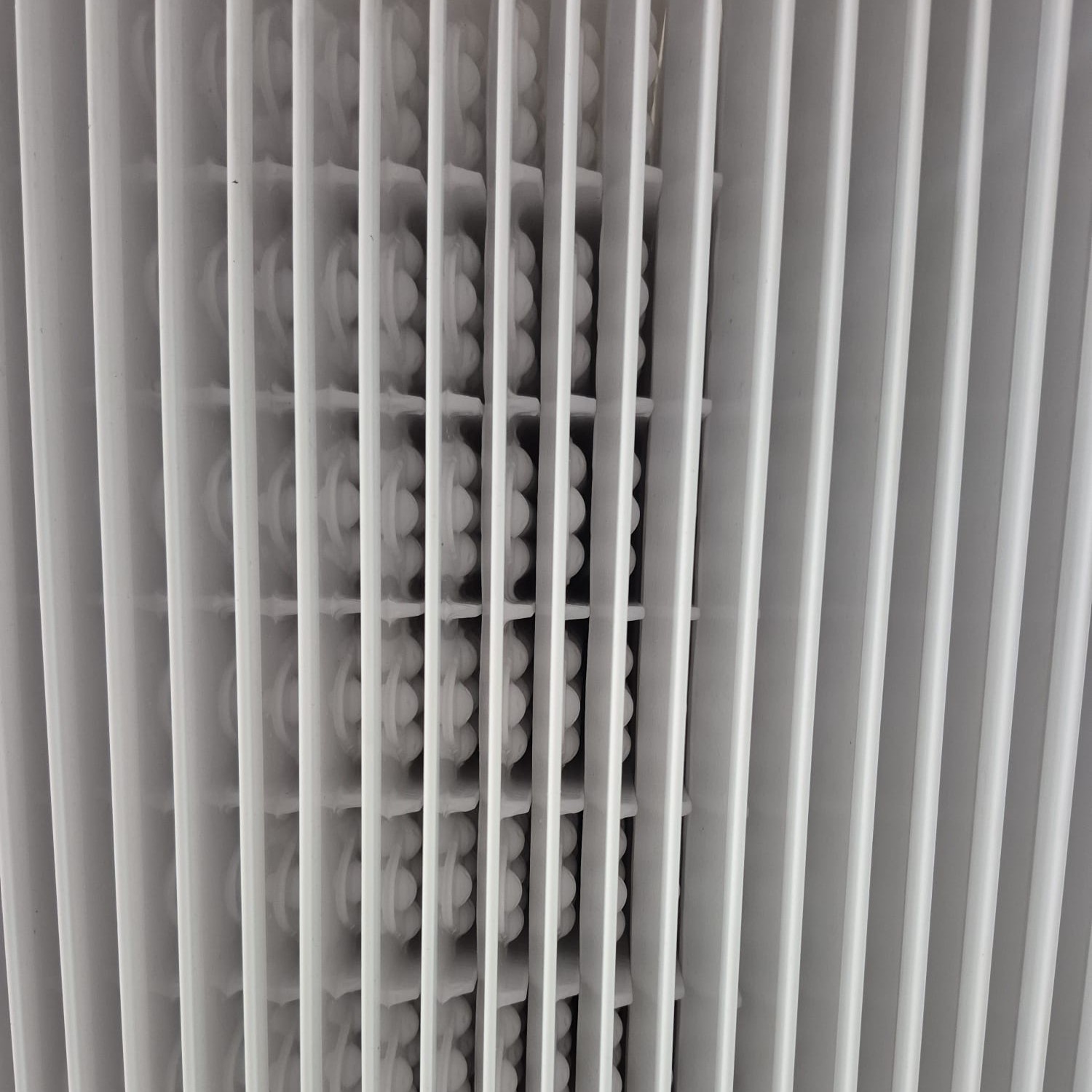
At Airstream Technologies, we utilise composite plate heat exchangers incorporating an engineered dome-embossed plate geometry.
Rather than relying exclusively on the conductive properties of the material, the design also considers the behaviour of the airflow as it passes through the heat exchanger.
The dome formations introduce changes in the local flow path and channel geometry.
As air moves around these features, local velocity, flow direction and boundary-layer development can be influenced, promoting convective heat transfer at the plate surfaces.
In principle, appropriately designed surface features can reduce local thermal resistance and increase the rate at which heat passes between the air and the plate.
This is especially important for polymer-based exchangers, where optimising the air-side heat transfer characteristics can help compensate for lower material conductivity.
Of course, there is a balance to achieve.
Geometry that improves heat transfer may also increase resistance to airflow.
An effective design must therefore consider heat recovery performance alongside pressure drop and fan energy consumption.
The objective is not maximum turbulence or maximum conductivity in isolation. It is effective heat transfer with an acceptable air-side pressure drop.
An indoor swimming pool presents considerably different conditions from those encountered in a conventional commercial air handling application.
Pool hall extract air is typically warm and humid, and can contain airborne compounds associated with pool water disinfection.
When warm, moisture-laden air passes through a heat exchanger during colder weather, condensation can form on the extract-side surfaces.
This means the heat exchanger is exposed not only to the pool hall atmosphere, but potentially to condensate containing dissolved contaminants.
Over time, these conditions can create a challenging environment for metallic components.
Protective coatings are one method of addressing this exposure. Correctly specified and applied coatings can provide corrosion protection, but their long-term effectiveness depends on their continued integrity and chemical suitability.
A composite heat exchanger offers an alternative approach.
The polymer heat transfer surfaces are not dependent on an applied protective coating to prevent electrochemical corrosion of an underlying metal.
Unlike aluminium, a suitable non-metallic polymer cannot experience conventional metallic pitting or galvanic corrosion.
This does not mean that all polymers are immune to every form of chemical attack or ageing. Material compatibility, temperature limits and mechanical performance must still be considered during design.
Nevertheless, corrosion resistance inherent to the heat transfer material, rather than dependent on a surface coating, is a compelling characteristic for equipment operating in a swimming pool atmosphere.
The high moisture content of indoor swimming pool extract air also introduces another important consideration.
When warm, humid extract air is cooled below its dew point, water vapour begins to condense.
This phase change releases latent heat.
Within a suitable air-to-air plate heat exchanger, that released energy can contribute to the thermal energy transferred to the incoming fresh air.
As a result, the total heat recovered under condensing conditions can differ from that calculated using sensible heat transfer alone.
Plate geometry can influence the formation, distribution and drainage of condensate, while appropriate condensate management is important for effective operation and maintenance.
The dome-embossed composite geometry used within Airstream's heat exchangers provides a formed surface across which both airflow and condensation behaviour must be considered.
Importantly, this process does not require moisture to transfer between the two airstreams.
The principle of a non-permeable plate heat exchanger is to transfer thermal energy while maintaining separation between the extract and supply air paths.
For indoor pool applications, this separation is particularly valuable.
Indoor swimming pool ventilation systems operate across varying environmental and operational conditions.
Outdoor temperatures change throughout the year, and many systems utilise controlled fresh-air volumes and variable-speed fans to respond to changing ventilation and dehumidification requirements.
Consequently, heat exchanger performance should not be evaluated at one operating point alone.
As airflow changes, so do the air-side heat transfer coefficients, pressure losses and potentially the condensation conditions within the exchanger.
An effective design considers how the heat exchanger performs throughout its intended operating range.
This includes the relationship between:
These characteristics provide a more comprehensive understanding of heat recovery performance than a comparison of plate material conductivity alone.
For pool owners, operators and consulting engineers, long-term performance matters just as much as initial efficiency.
A heat exchanger must operate reliably in an environment where condensation, chemical exposure and prolonged operating hours are routine.
Composite technology offers several practical advantages for these applications.
Its resistance to metallic corrosion mechanisms removes the need for a protective coating on the polymer heat transfer surfaces.
Its engineered geometry allows airflow behaviour and heat transfer characteristics to be addressed as part of the plate design.
Composite construction can also offer weight advantages, depending on exchanger construction and the alternatives being compared, helping with handling, installation and replacement projects.
At Airstream Technologies, we place significant emphasis on selecting and engineering heat recovery technology specifically for indoor swimming pool environments.
Our dome-embossed composite plate heat exchangers form part of that approach, combining material suitability with an engineered heat transfer surface.
The result is a technology selected not simply for its thermal properties in isolation, but for its suitability within a complete swimming pool ventilation system.
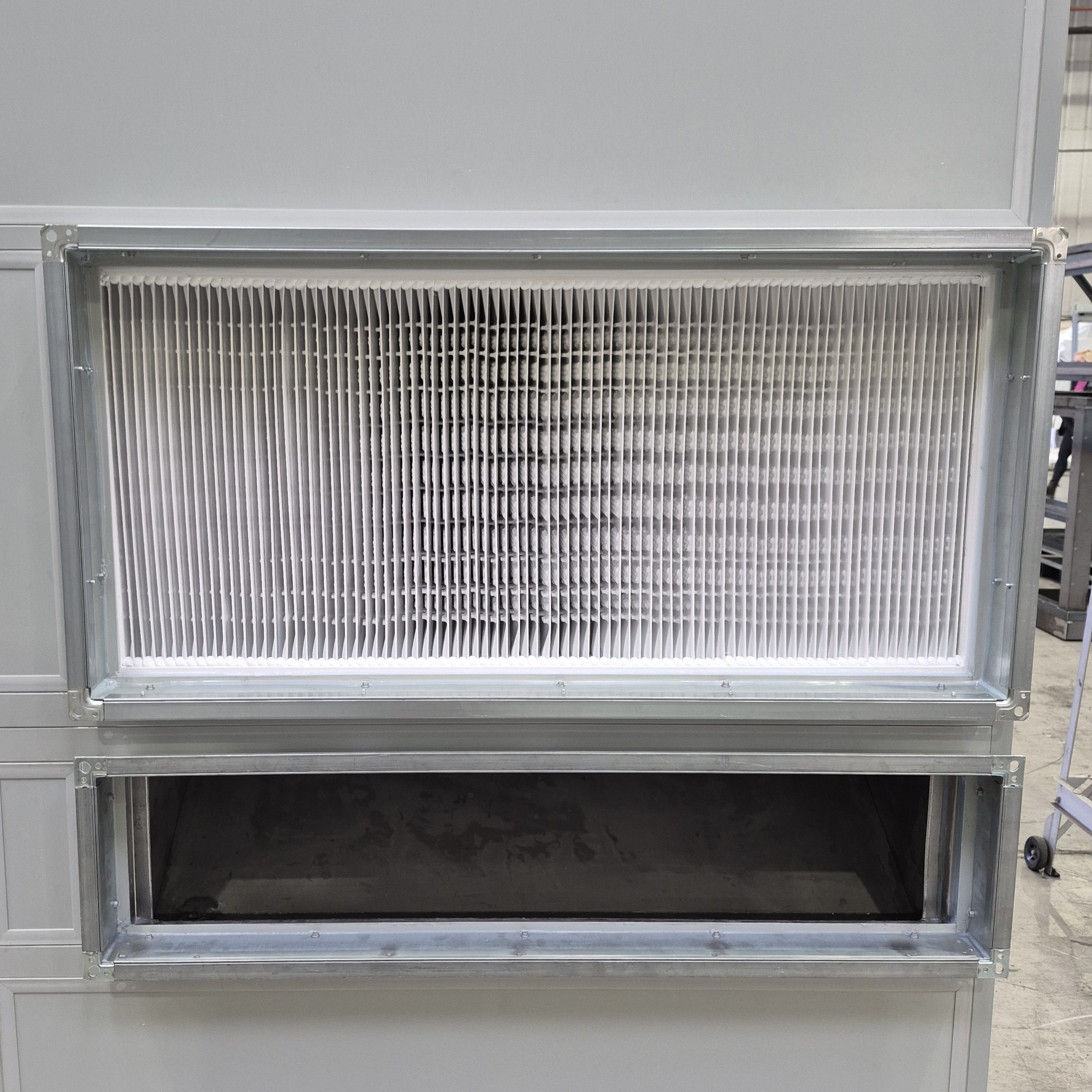
Aluminium remains an effective material for many heat exchanger applications, and its high thermal conductivity is an established advantage.
However, conductivity is only one part of the heat transfer equation.
In thin-plate air-to-air applications, air-side thermal resistance, plate geometry, flow characteristics and surface area can significantly influence the thermal performance of the complete exchanger.
For indoor swimming pools, material durability, resistance to corrosion, condensation management and maintainability add further considerations.
A properly engineered composite plate heat exchanger can deliver effective thermal performance without relying on the corrosion protection of a coated metallic heat transfer surface.
At Airstream Technologies, we believe that is a compelling engineering approach for equipment expected to operate reliably in one of the most demanding environments within the HVAC industry.
Because effective heat recovery is not determined by material conductivity alone. It is determined by how the entire heat exchanger is engineered for the application.
Airstream Technologies — UK-designed and manufactured swimming pool ventilation solutions.
Airstream Technologies would like to extend a huge thank you to everyone who visited us on our stand at SPATEX, as well as to all of our guests who joined us for the Gala Dinner. It was a brilliant event and a fantastic opportunity to connect with so many professionals across the pool, spa, and wellness industries.
Read MoreAirstream is excited to be exhibiting at SPATEX 2026, the UK’s leading water leisure exhibition, celebrating its 30th anniversary.
Read MoreAirstream is proudly manufactured in the UK. With over 40 years of advanced pool ventilation expertise, our solutions are designed, engineered, and built in Britain. By keeping production local, Airstream guarantees exceptional quality, reliability, and performance across every product.
Read More


